how to protect my crypto assets
This article guides crypto investors in securing their digital assets by understanding wallets, keys, and cybersecurity best practices to prevent irreversible financial losses.
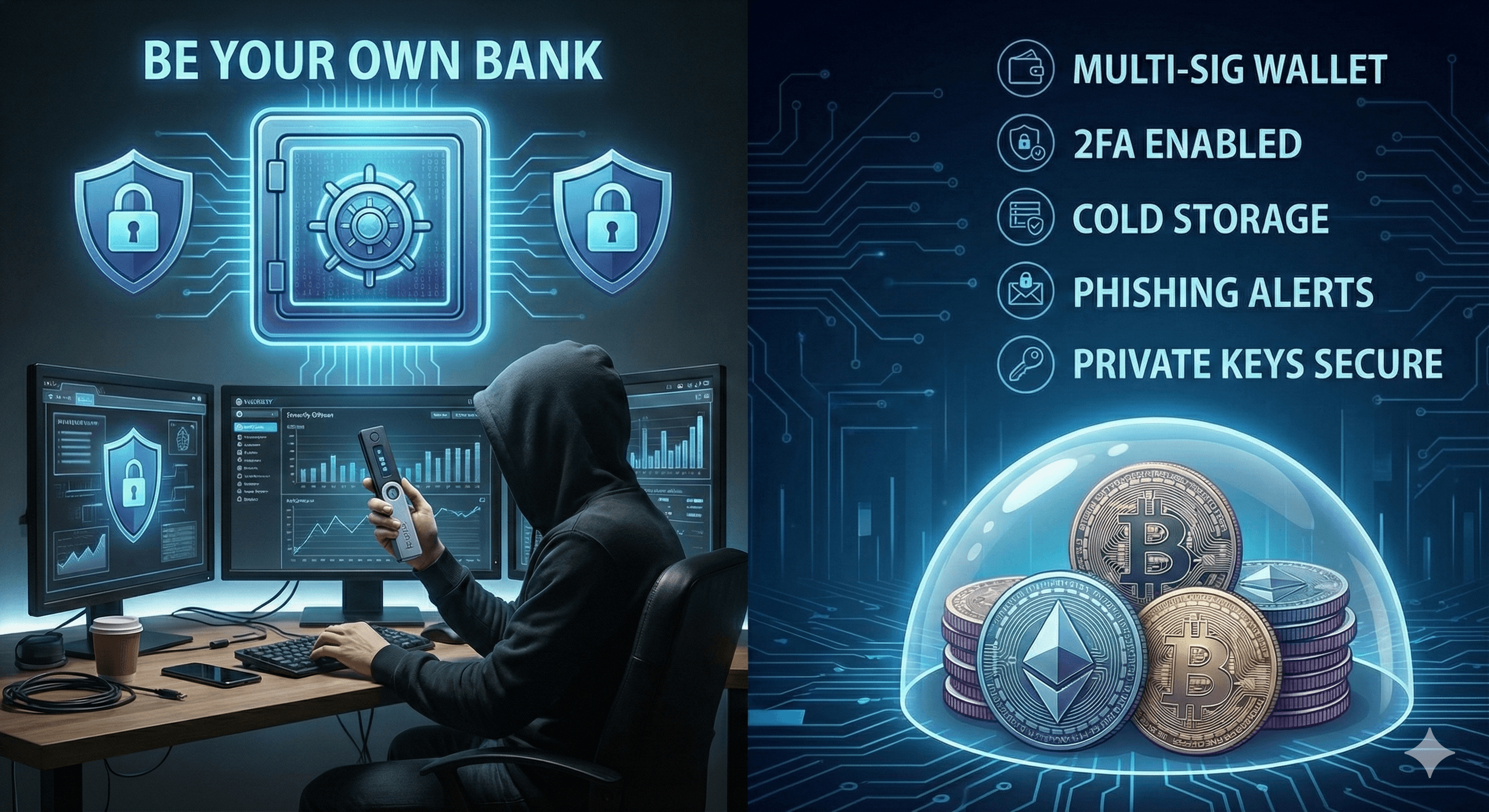
- You are your own bank; crypto security is your responsibility.
- Neglecting crypto cybersecurity leads to devastating losses.
- Wallets store keys that grant control of your crypto.
- Never share your private keys or recovery words.
- Understand the difference between hot and cold wallets.
The world of crypto assets is electrifying. It promises financial freedom, innovation, and a decentralized future. Yet, with great power comes great responsibility – and significant risk. Unlike traditional banking, where institutions protect your funds, in the realm of cryptocurrency, you are your own bank. This means the onus of securing your valuable tokens rests squarely on your shoulders. Neglecting crypto cybersecurity can lead to devastating losses, often irreversible. That's why understanding and implementing robust security measures is not just recommended; it's absolutely essential.
This comprehensive guide will equip you with the knowledge and practical strategies needed to fortify your digital holdings. We'll delve into the intricacies of wallets, the paramount importance of your private keys and recovery words, and explore a suite of best practices designed to protect your crypto assets from the ever-present threats of hackers, scammers, and even your own oversight. From the foundational principles of never sharing your secrets to advanced contingency planning, prepare to transform your approach to securing your digital wealth.
Understanding Your Digital Fortress: Wallets and Keys
At the heart of your crypto cybersecurity strategy lies a fundamental understanding of how your digital wealth is stored and accessed. Unlike physical money, your crypto tokens aren't "in" your wallet in the traditional sense. Instead, your wallet holds the keys – specifically, the private keys – that grant you ownership and control over your assets on the blockchain.
The Essence of Crypto Wallets: Hot vs. Cold Storage
A crypto wallet is essentially software or hardware that allows you to interact with a blockchain. It enables you to send, receive, and manage your crypto assets. Wallets come in various forms, primarily categorized into "hot" and "cold" storage.
Hot wallets are connected to the internet. These include web-based wallets, desktop applications, and mobile apps. They offer convenience and ease of access for frequent transactions. However, their online nature makes them inherently more vulnerable to cyberattacks, malware, and phishing attempts.
Cold wallets, in contrast, are completely offline. They are typically hardware devices designed specifically for storing private keys securely. Because they are disconnected from the internet, they offer the highest level of security against online threats, making them ideal for storing significant amounts of crypto tokens over long periods.
Private Keys and Seed Phrases: Your Ultimate Guardians
Every crypto wallet generates a unique pair of cryptographic keys: a public key and a private key. The public key is like your bank account number; you can share it freely for others to send you crypto assets. The private key, however, is your secret password to unlock and spend your funds. It is a long, alphanumeric string that must be kept absolutely confidential.
Accompanying your private key is often a "seed phrase" or "recovery words" – typically a sequence of 12 or 24 words. This phrase is a human-readable representation of your private key and serves as the master key to restore access to your funds if your wallet is lost, damaged, or inaccessible. Losing your private key or recovery words means losing access to your crypto assets forever. Sharing them means handing over complete control of your funds to another person. This is the single most critical rule of crypto cybersecurity.
Mastering Digital Defenses: Best Practices for Crypto Cybersecurity
Beyond understanding the basics of wallets and keys, implementing a robust set of digital defenses is paramount. Think of these practices as building multiple layers of security around your crypto assets, making it incredibly difficult for attackers to breach your defenses.
Fortifying Your Digital Gates with Strong Passwords and 2FA
The foundation of any good cybersecurity strategy begins with strong, unique passwords. Never reuse passwords across different platforms, especially for your crypto exchanges, wallets, or email accounts linked to your crypto activities. Use a combination of uppercase and lowercase letters, numbers, and symbols, aiming for at least 12-16 characters.
Complement strong passwords with Two-Factor Authentication (2FA) wherever possible. 2FA adds an extra layer of security by requiring a second form of verification in addition to your password. Hardware 2FA devices (like YubiKey) or authenticator apps (like Google Authenticator or Authy) are significantly more secure than SMS-based 2FA, which can be vulnerable to SIM-swap attacks. Always prioritize the strongest available 2FA method for your crypto accounts.
Vigilance Against Digital Predators: Phishing and Scams
The crypto space is unfortunately rife with scammers employing sophisticated phishing techniques. Phishing involves deceptive attempts to trick you into revealing sensitive information, such as your private keys, recovery words, or login credentials. These attacks often come through fake emails, malicious websites mimicking legitimate platforms, or direct messages on social media.
Always double-check URLs, scrutinize email sender addresses, and be wary of unsolicited messages promising free tokens or urgent account issues. If something feels off, it probably is. Never click on suspicious links. Instead, manually type in the correct website address for your exchanges or wallets. Remember, legitimate platforms will never ask you for your private keys or recovery words.
Maintaining a Clean and Updated Digital Environment
Your operating system, web browser, and any software wallets you use should always be kept up-to-date. Software updates often include critical security patches that fix vulnerabilities attackers could exploit. Using outdated software is like leaving a door unlocked for a thief.
Regularly scan your devices for malware and viruses using reputable antivirus software. Consider using a Virtual Private Network (VPN) when accessing your crypto accounts, especially on public Wi-Fi networks, to encrypt your internet traffic and protect your privacy. Avoid accessing your crypto assets from public computers or shared devices, as they may harbor keyloggers or other malicious software.
Choosing the Right Tools: Hardware and Software Solutions
The market offers a diverse range of tools designed to help you secure your crypto assets. Making informed choices about which wallets and services to use is a critical aspect of your crypto cybersecurity strategy.
The Unbreakable Vault: Hardware Wallets (Cold Storage)
For anyone holding a significant amount of crypto tokens, a hardware wallet is an indispensable investment. These physical devices keep your private keys isolated from the internet, even when you're making transactions. They typically require physical confirmation on the device itself for every transaction, making it virtually impossible for remote hackers to steal your funds without physical access to the device and your PIN.
Leading brands like Ledger and Trezor offer robust security features. While they require an initial investment, the peace of mind and enhanced security they provide for your long-term holdings of crypto assets are invaluable. Remember to buy hardware wallets directly from the manufacturer to avoid tampered devices.
Convenience with Caution: Software Wallets (Hot Storage)
Software wallets (desktop, mobile, or web-based) offer convenience for day-to-day transactions and smaller amounts of crypto tokens. They are easy to set up and use, but their internet connectivity exposes them to higher risks. If you use a software wallet, ensure it's from a reputable provider, has strong encryption, and offers 2FA.
Always download software wallets only from their official websites or trusted app stores. Be cautious of fake wallet apps designed to steal your funds. Treat your software wallet like a physical wallet for spending money – carry only what you need, and keep the bulk of your savings in more secure cold storage.
Leveraging Exchange Security Features and Multi-Sig Wallets
Many centralized crypto exchanges offer robust security features, including advanced 2FA options, withdrawal whitelists, and insurance for certain types of losses. While it's generally recommended not to store large amounts of crypto assets on exchanges (as they are a centralized point of failure), leveraging their security tools for active trading funds is crucial.
For enhanced security, especially in collaborative or institutional settings, consider multi-signature (multi-sig) wallets. A multi-sig wallet requires multiple private keys to authorize a transaction (e.g., 3 out of 5 keys are needed to send funds). This setup significantly reduces the risk of a single point of failure and adds an extra layer of protection against theft or unauthorized access.
The Human Element: Your Role in Crypto Safety
No matter how sophisticated your technological defenses, the weakest link in any cybersecurity chain is often the human element. Your vigilance, discipline, and awareness are the ultimate safeguards for your crypto assets.
The Golden Rule: Never Share Your Secrets
This cannot be stressed enough: never, ever share your private keys, seed phrases, or recovery words with anyone, under any circumstances. No legitimate service, exchange, or support team will ever ask you for this information. Anyone who does is attempting to scam you and steal your tokens.
When storing your recovery words, do so offline and securely. Write them down on paper and store them in multiple, geographically separate, secure locations (e.g., a fireproof safe, a bank deposit box). Avoid storing them digitally on computers, phones, or cloud services, as these are vulnerable to hacks. Consider using metal plates for enhanced durability against fire and water damage.
Guarding Against Social Engineering and Impersonation
Social engineering is a significant threat where attackers manipulate individuals into performing actions or divulging confidential information. Scammers might impersonate support staff, influential figures, or even friends and family to gain your trust. They often create a sense of urgency or fear to pressure you into making rash decisions.
Always verify the identity of anyone asking for sensitive information, especially if they initiate contact. Be skeptical of too-good-to-be-true offers or demands for immediate action. Develop a healthy sense of paranoia when it comes to your crypto assets and anything that could compromise them.
Diligence and Due Diligence: Your Personal Crypto Audit
Regularly review your security practices. Check your exchange and wallet activity logs for any suspicious transactions. Educate yourself about the latest scam tactics and vulnerabilities in the crypto cybersecurity landscape. The world of crypto evolves rapidly, and so do the threats.
Before investing in new tokens or using new decentralized applications (dApps), conduct thorough research. Understand the project, its smart contracts, and its security audits. Be wary of projects with vague details or promises of unrealistic returns. Your personal due diligence is a powerful shield against potential losses.
Contingency Planning and Advanced Strategies
Protecting your crypto assets isn't just about preventing theft; it's also about preparing for unforeseen circumstances. A comprehensive strategy includes planning for potential device loss, death, or even personal error.
Planning for the Unexpected: Crypto Estate Planning
What happens to your crypto assets if you become incapacitated or pass away? Without proper planning, your digital wealth could become permanently inaccessible to your loved ones. Consider creating a clear, legally sound plan that outlines how your beneficiaries can access your wallets and keys. This might involve a trusted lawyer or a specialized crypto inheritance service.
This plan should detail the location of your recovery words, any necessary passwords, and clear instructions for your chosen inheritors. Ensure this information is encrypted and only accessible through secure, multi-step verification, preventing unauthorized access while you're alive but allowing for secure transfer upon your death.
Diversification and Layered Security
Avoid putting all your eggs in one basket. Just as you might diversify your investment portfolio, consider diversifying your storage methods for your crypto assets. For instance, keep a portion of your funds in a hardware wallet, another smaller portion in a secure software wallet for daily use, and perhaps a very small amount on an exchange for active trading.
Layered security means combining multiple protection methods. This includes strong passwords, 2FA, hardware wallets, encrypted backups of recovery words, and vigilance against phishing. Each layer acts as a barrier, making it exponentially harder for an attacker to gain access to your funds.
Staying Informed: The Ever-Evolving Threat Landscape
The crypto cybersecurity landscape is dynamic, with new threats and vulnerabilities emerging constantly. Stay updated by following reputable crypto news sources, security experts, and official announcements from your wallet providers and exchanges. Join relevant online communities, but always exercise caution and skepticism when interacting with strangers or unsolicited advice.
Understanding potential attack vectors, such as supply chain attacks, smart contract exploits, or new social engineering tactics, empowers you to proactively adjust your security posture. Continuous learning is a key component of effective long-term crypto asset protection.
Protecting your crypto assets is an ongoing journey that demands diligence, education, and unwavering vigilance. The responsibility for securing your digital wealth rests entirely with you, but by implementing the comprehensive cybersecurity strategies outlined in this article, you can significantly mitigate risks and safeguard your investments. From mastering the basics of wallets and never sharing your recovery words to employing hardware security and planning for the future, every step you take strengthens your digital fortress.
Embrace the mindset of being your own bank, and proactively build a multi-layered defense system around your crypto tokens. The decentralized promise of cryptocurrency is powerful, but its full potential can only be realized when users are empowered and equipped to protect their assets. Stay informed, stay secure, and enjoy the future of finance with confidence.
About the Author
GuardScan Team