what is a honeypot in crypto
Is Your Crypto Investment a Hidden Trap? The Threat of Honeypot Scams
Imagine depositing your hard-earned crypto into a promising new DeFi project, only to find you can never withdraw it. This isn't a rare nightmare; it's a stark reality for countless investors, contributing to the staggering $1.7 billion lost to crypto scams in 2023 alone. The core fear for many in the crypto space is uncertainty: “How do I truly know if this project is legitimate before I commit my funds?” Without deep technical expertise, distinguishing a groundbreaking opportunity from a meticulously crafted scam can feel impossible.
One of the most insidious threats lurking in the decentralized world is the crypto honeypot. These aren't complex hacks, but cunningly designed smart contracts that lure you in with the promise of gains, only to trap your assets permanently. They play on your ambition and fear of missing out, leaving you with irreversible losses and a profound sense of betrayal. The decentralized nature of crypto, while offering freedom, also provides fertile ground for bad actors to deploy these traps undetected.
You don't need to become a blockchain developer overnight to protect yourself. GuardScan.io provides an essential shield against such threats. Our AI-powered crypto security analysis allows you to paste any smart contract address or wallet and receive comprehensive threat intelligence in just 30 seconds. With GuardScan, you gain the clarity and confidence to navigate DeFi safely, without needing specialized blockchain expertise. We give you actionable insights, turning complex code into simple green/red signals so you can scan before you invest.
What is a Honeypot in Crypto and How Does It Work?
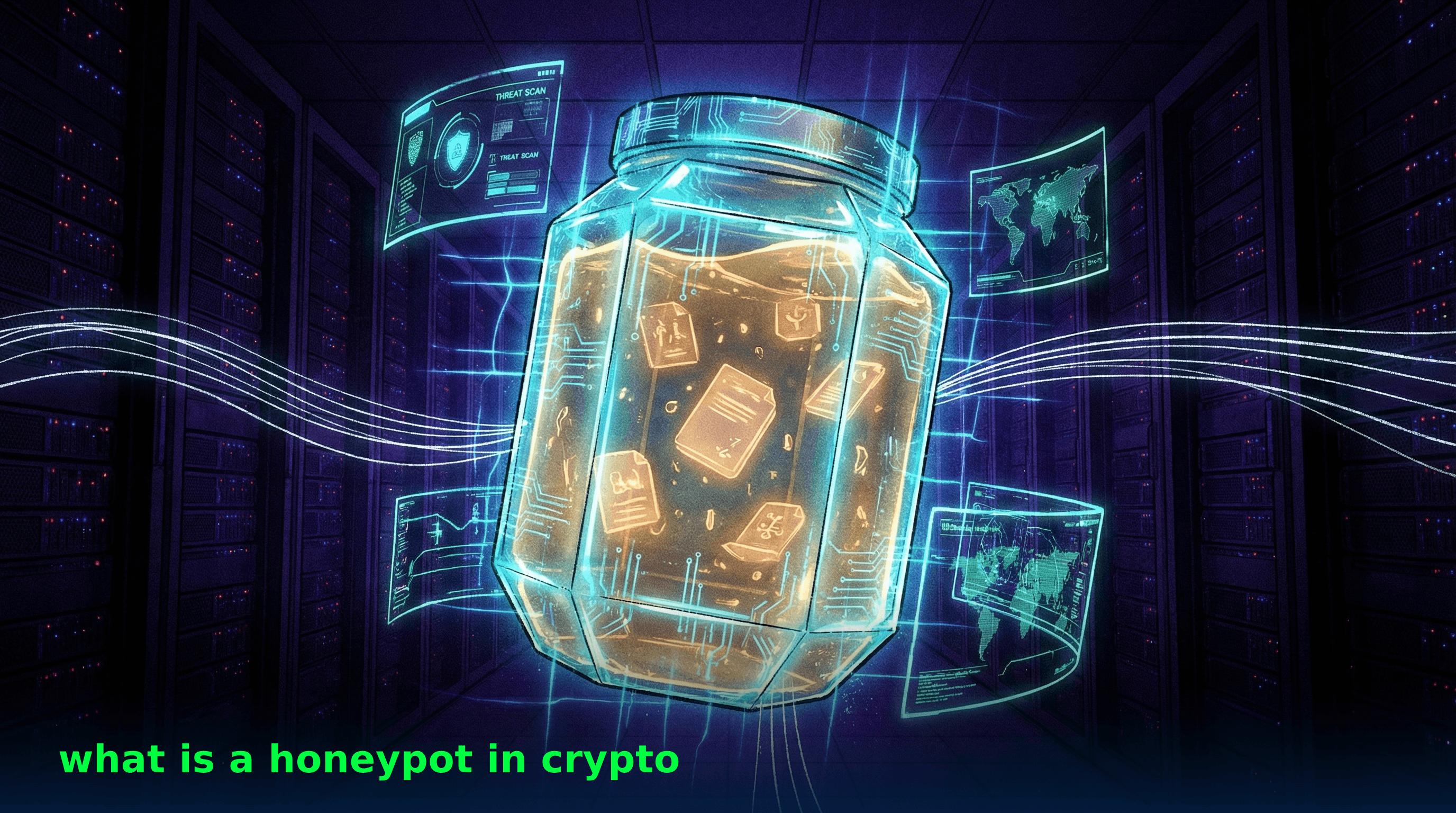
A honeypot in crypto is a malicious smart contract designed to lure victims into sending funds that they can never withdraw. It functions much like an insect trap: it appears attractive and accessible, allowing initial interaction like buying a token or depositing funds, but has built-in mechanisms that prevent the user from completing an exit, such as selling the token or withdrawing liquidity.
The fundamental trick of a honeypot lies in its smart contract code, which allows users to buy or deposit assets without issue, creating the illusion of a legitimate investment. However, when a user attempts to sell the token or withdraw their funds, specific conditions are triggered that prevent the transaction from succeeding or make it prohibitively expensive. The scammer, often the contract owner, retains the ability to withdraw all accumulated funds, effectively draining the 'honeypot' at their leisure.
These contracts often manipulate core functions, like the `transfer` function in an ERC-20 token, to create the trap. For instance, the contract might include a clause that only allows the token creator's wallet to sell, or it might implement a whitelist/blacklist system that excludes every wallet except the scammer's from selling. This subtle manipulation is hard to spot without a detailed smart contract audit, making it a highly effective method for defrauding unsuspecting investors who lack the technical skills to review the underlying code.
How Do Honeypot Scams Deceive Crypto Investors?
Honeypot scams deceive crypto investors by creating an illusion of profit and legitimacy through manipulated price action and strategic social engineering, luring victims into a trap they cannot escape. Scammers employ various tactics to build credibility and excitement around their fraudulent projects, making them appear like the next big thing in crypto or DeFi.
A common tactic involves creating fake liquidity pools on decentralized exchanges (DEXs) and artificially pumping the token's price using a small amount of their own capital. This initial surge creates a 'fear of missing out' (FOMO) among potential investors, who see the token skyrocketing and believe they're getting in on a lucrative opportunity. Social media campaigns, fake testimonials, and paid influencers are often used to amplify this hype, fostering a false sense of community and trust around the project.
Technically, the deception relies on sophisticated smart contract manipulation that is not immediately visible. Investors can buy the token, and their transactions go through successfully, reinforcing the belief that the project is legitimate. The trap only becomes apparent when they try to sell; this delayed realization means victims often deposit substantial amounts before discovering the scam, maximizing the scammer's take. The hidden clauses in the contract code are designed to make selling impossible or to impose such high transaction fees that selling becomes unprofitable, effectively locking assets.
What are Common Technical Red Flags of a Crypto Honeypot?
Common technical red flags of a crypto honeypot include unverified contract source code, suspicious `onlyOwner` modifiers on critical functions, and hidden transfer restrictions within the smart contract. Identifying these requires a closer look at the smart contract's structure and permissions, which is often beyond the average investor's technical understanding.
- Unverified Contract Source Code: One of the clearest warning signs is when a smart contract's source code is not verified on blockchain explorers like Etherscan. Without verified code, it's impossible for anyone, including security experts, to review the contract's logic and identify malicious functions. This opacity is a deliberate tactic by scammers to hide their intentions.
- Suspicious `onlyOwner` Modifiers: While legitimate contracts use `onlyOwner` for administrative tasks, if functions critical to user interaction—such as `transfer`, `approve`, or `withdraw`—are excessively restricted to the contract owner, it's a huge red flag. This allows the scammer to manipulate trades, block withdrawals, or even perform a rug pull at will.
- Hidden Transfer Restrictions: Malicious code can be embedded to prevent specific addresses (or all non-owner addresses) from selling or transferring tokens. This might involve checks on the sender's balance, blacklisting mechanisms, or logic that only permits transfers to a select few addresses, effectively turning your purchased tokens into worthless assets.
- Exorbitant Tax on Selling: Some honeypot contracts allow selling but impose an extremely high tax (e.g., 99% or even 100%) on sell transactions. While buying might incur a normal fee, selling becomes unprofitable due to these hidden charges, subtly draining funds without outright blocking transactions.
- Lack of Proper Liquidity Lock: A project claiming to be secure should have its liquidity pool tokens locked for a significant period. The absence of a verifiable liquidity lock certificate is a major warning, as it allows the developer to remove all liquidity, executing a rug pull, which often goes hand-in-hand with honeypot mechanics.
How Can Investors Detect and Avoid Crypto Honeypots?
Investors can detect and avoid crypto honeypots by performing thorough due diligence, which includes meticulously analyzing a project's smart contract code and scrutinizing community sentiment before investing. For most crypto investors and DeFi users, however, directly analyzing complex smart contract code for hidden exploits is an impossible task, demanding specialized programming knowledge and blockchain expertise.
This is precisely where GuardScan.io becomes an indispensable tool for your DeFi security strategy. Instead of sifting through lines of Solidity code, you can leverage our AI-powered platform to conduct a comprehensive smart contract audit. GuardScan is specifically designed to analyze the contract code for common honeypot traps, such as restricted sell functions, unverified code, and suspicious ownership privileges. This immediate, deep analysis provides a crucial layer of protection, making sophisticated token security analysis accessible to everyone.
Furthermore, GuardScan identifies other critical vulnerabilities that often accompany honeypots, including mint risks, which allow creators to infinitely create new tokens, devaluing your investment, and ownership concentration risks, where too much control resides with a single entity. Our platform goes beyond simple code checks; it evaluates the entire contract ecosystem to provide a holistic view of potential threats. By simply pasting the contract address, you get a clear, actionable threat breakdown, illuminating risks that would otherwise remain hidden to the untrained eye. GuardScan’s robust rug pull detection capabilities are essential, as many honeypots are integral parts of broader rug pull schemes. Our AI-powered insights quickly flag contract mechanisms that facilitate such scams, giving you an early warning. In just 30 seconds, you receive clear green or red signals, indicating whether a contract is safe to interact with or a potential trap, allowing you to make informed decisions and protect your assets without needing to understand complex code or blockchain intricacies. Scan before you invest, and turn uncertainty into confidence.
Why is GuardScan Essential for Protecting Your DeFi Investments?
GuardScan is essential for protecting your DeFi investments because it offers an unparalleled AI-powered security analysis, making sophisticated smart contract audits and comprehensive crypto scam detection accessible to every crypto investor. In an environment rife with complex scams like honeypots and rug pulls, traditional security measures or manual code reviews are often too slow, too expensive, or simply beyond the reach of the average user.
Our platform bridges this critical gap by eliminating the need for you to be a blockchain developer or security expert to safeguard your assets. With just a smart contract address or a wallet address, our advanced AI swiftly processes vast amounts of data, identifying hidden vulnerabilities, malicious code patterns, and suspicious activities in mere seconds. This speed is crucial in the fast-paced crypto market, where opportunities and threats can emerge and disappear in an instant.
GuardScan's actionable intelligence goes beyond just identifying problems; it provides clear, understandable explanations. You receive a precise 0-100 risk score for any contract or wallet, accompanied by plain-English breakdowns of detected threats. This empowers you to quickly grasp the implications of a contract's code, understanding if it contains honeypot logic, potential minting exploits, or if a wallet has interacted with known fraudulent contracts. Our wallet security check feature ensures you're also aware of past interactions that might expose you to risk, offering a holistic view of your security posture. For anyone serious about DeFi security, GuardScan is the proactive shield needed to navigate the crypto landscape confidently. It transforms overwhelming technical data into clear, concise, and immediate insights, allowing you to protect your portfolio from the ever-evolving tactics of scammers.
How Can You Protect Your Funds from Crypto Honeypots Today?
You can protect your funds from crypto honeypots today by making GuardScan.io your first line of defense before interacting with any new smart contract or token. The threat of losing your hard-earned assets to a cleverly designed scam is real and pervasive in the crypto world, with honeypots representing one of the most insidious forms of financial deception. Without the right tools, identifying these hidden traps is virtually impossible for the vast majority of investors, leaving their funds vulnerable to malicious smart contract vulnerabilities.
GuardScan empowers you to take control of your crypto security. Our platform provides immediate, actionable threat intelligence, performing a comprehensive token security analysis that highlights vulnerabilities such as honeypot mechanisms, rug pull potentials, and other critical risks within seconds. This proactive approach ensures you're always one step ahead of scammers, protecting your investments from malicious contracts designed to trap your funds indefinitely. Don't fall victim to the promise of quick gains without verifying the underlying smart contract's integrity. The difference between a lucrative investment and a devastating loss often comes down to a quick, informed security check. With GuardScan, you have a powerful, AI-driven ally that provides a transparent and easy-to-understand risk assessment, giving you the confidence to invest wisely and securely.
Scan this contract on GuardScan before you invest — it takes 30 seconds. Protect your portfolio, scan before you invest.
About the Author
GuardScan Team